Grief has a way of reshaping everything it touches. It changes how people see the world, how they move through each day, and, for some, how they create. For painter Leigh Witherell, loss became the lens through which her art found its deepest clarity.
Based in Philadelphia, Pennsylvania, Leigh has built a body of work that captures the moments most of us glance past: the private gestures, the pauses in conversation, the unguarded expressions that reveal more than words ever could. Raised in a family of storytellers, she grew up with an ear for what was left unsaid. That sensitivity to silence and subtext later became the foundation of her practice, allowing her to turn fragments of everyday life into layered, emotional narratives on canvas.
Her career shifted dramatically in April 2021, when she lost her daughter. The experience was devastating and permanent, and it pushed her into new artistic territory. Figures in her paintings became bare, stripped of all protective layers. The human body, vulnerable and exposed, became for her the truest representation of grief. In these works, sorrow is not loud or theatrical; it is subtle, persistent, and ever-present, much like the way loss sits quietly inside those who carry it.
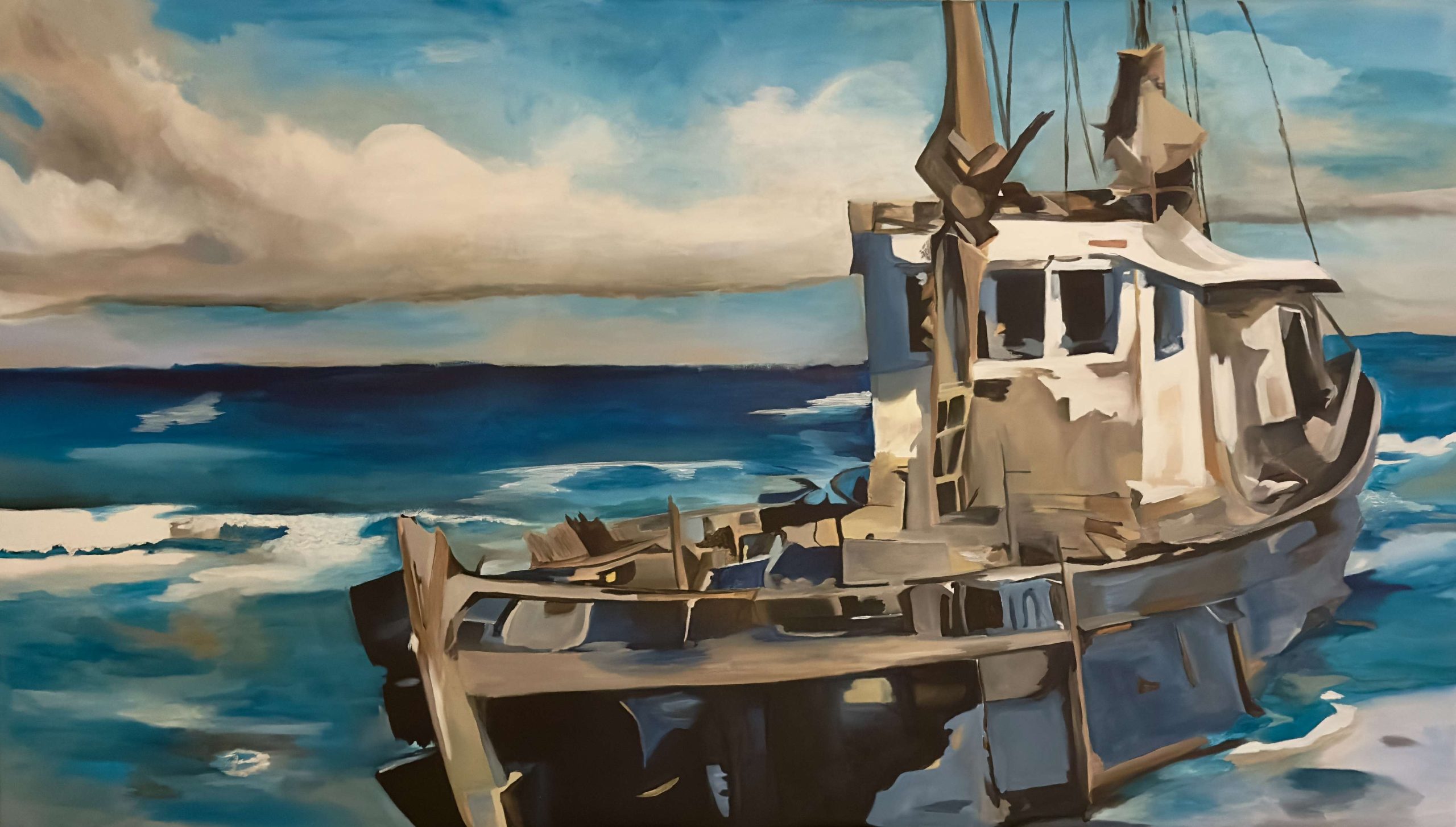
Leigh’s artistic voice is distinct in its restraint. She avoids overly bright palettes, instead leaning into earth tones that invite viewers to see themselves within the frame. Her brushwork is urgent, sometimes impatient, which gives her compositions an honesty that feels immediate. Rather than polish emotions into something distant, she allows them to stay raw. The result is art that does not tell viewers what to feel but gives them the space to reflect on their own experiences of loss, love, and resilience.
The challenge of sharing this work has often extended beyond the studio. In the digital sphere, where many artists must rely on visibility to reach audiences, Leigh has faced recurring obstacles. Because her art often depicts nude figures, her posts are frequently censored on Meta platforms. The takedowns come without clear rules, leaving her to describe the experience as playing a game where the rules are invisible but the stakes are high. She has noted the inconsistency of the system, seeing other works remain untouched while hers are removed, a disparity that speaks to the larger question of who gets to be seen and who does not.
Rather than allowing these setbacks to silence her, she has folded them into her perspective as an artist. To her, the algorithm is not separate from the cultural and political climate; it is part of it. Just as social systems attempt to regulate expression, digital platforms act as gatekeepers of visibility. This awareness has pushed her to take on themes of repression, gender, politics, and cultural control in her current projects. She describes artists as visual historians, and for her, censorship itself has become part of the history she documents.

At the same time, she has not turned her back on technology. She uses AI image generators as private tools, training them on her own style to help her move from idea to canvas more efficiently. To her, AI is no substitute for the soul of a painting, but like the Camera Lucida of the past, it is another device to aid the process. By using it intentionally, she ensures it supports rather than replaces her creative voice.
Leigh’s work has reached audiences well beyond Florida. She has held a solo exhibition in Madrid, completed a residency in Portugal, and has been featured in art magazines and private collections internationally. Yet what stands out most is not the resume but the consistency of her purpose. Each canvas, whether rooted in personal grief or wider social commentary, is part of her effort to capture what might otherwise go unseen.
Her journey shows how loss, though deeply personal, can be transformed into work that speaks universally. Through her art, Leigh Witherell reminds us that grief is not only about endings, it is also about memory, resilience, and the stories we leave behind.